Welcome to my Blog

Are you filled with more questions than answers? frustrated with what's happening in the world?
Then you're ready for your own personal Renaissance.

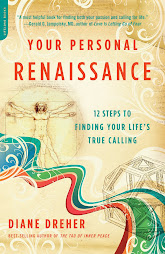
This blog offers insights from my books, including my new book, Your Personal Renaissance. .

I'll add posts on how to persevere in the light of personal, political, and planetary challenges--and I welcome your questions and comments.

Monday, September 9, 2013

Look to the Light


The light of mindfulness can be beautiful, exhilarating, healing, and empowering, but there are so many distractions in life. It’s easy to get caught up in the shadows of self-doubt, worry, or criticism, dwelling on something that someone did or said to us or perhaps something we regret that we did or said. We might even feel we have good reason to be upset. But that “good reason” can pull us away from our awareness of the source, out of the sunlight into the shadows.

This summer I’ve been practicing mindfulness in earnest, meditating each morning and evening. Remarkably, I’ve stopped obsessing about some painful patterns from the past. Instead, I’ve been feeling an expansive sense of light in my life, a greater awareness of beauty in the world around me—the small miracles in my garden as white blossoms transform into tiny green beans, my little dog sleeping in the golden sunlight, gratitude for the cup of tea beside me. It’s almost like falling in love, falling deeply into the present moment.
The Medieval Franciscan St. Bonaventura used to return to the source by meditating on the Book of Nature, the beauty of the natural world. Recent reports by a British mental health consortium recommend “ecotherapy”—walking in natural settings, gardening, and other forms of active interaction with nature—as an effective treatment for anxiety and depression with minimal cost and no adverse side effects. And for most of us, nature is nearby, as close as walking outside and looking at the sky.
Try Bonaventuran meditation to return to the source:
  • Center yourself by taking a deep breath, then slowly releasing it.
  • Now look at something natural, something beautiful—perhaps a tree, the landscape, your dog or cat, or the sky above your head.
  • Focus your attention on this small part of Nature’s masterpiece, becoming more aware of the subtle, ever changing patterns of life.
  • Breathe in this beauty–into your heart.
  • Smile as you feel one with it.
Remember, you always have a choice: either to stand in your own shadow or to look toward the light, recognizing your oneness with the infinite source of beauty and goodness.

Paz y alegria,

Diane

Friday, May 10, 2013

Where are you going?


Life is a journey. Yet with all the demands of daily life, it's easy to get thrown off course.

I’ll admit I’ve been overwhelmed by demands from all directions, pushing my creative writing to the side. I’d had lots of reasons--excuses really—classes, committees, research deadlines, and a morass of mundane chores.

A few days ago, my university hosted two creative writers from Nebraska, Bud Shaw and Rebecca Rotert-Shaw, whose compelling readings and insights lit a fire in my heart. I still have that same pile of excuses. But now I see that as long as I keep telling myself that I “don’t have time to write,” I'll stay stuck in excuses and won’t have time to write.

We have a choice. In graduate school, I loved studying Renaissance writers, inspired by their  empowering affirmation of free will: we have a choice. We always have a choice. Our actions in life follow our attention. If we focus our attention on all the reasons we can’t:  write, create, follow our dreams, then we’re stuck in the world of can’t.

We shift into a dynamic new paradigm when we turn from feeling victimized by externals to ask, “What can I do?” Then the door starts to open, a shaft of light enters, illuminating our choices, lighting the way.

To make this paradigm shift for yourself, take a few moments now to:

  • Center yourself by mindfully breathing in and out.
  • Let yourself watch the procession of thoughts and feelings swirling by.
  • If you get hooked by one, take a deep breath.
  • Return to mindful breathing.
  • Ask yourself, “What can I do?”
  • At the end of your meditation, write in your journal. Without thinking, let the words flow. Follow the deep, authentic voice within you, casting light on new choices, revealing the next step on your journey.
  • You always have a choice.

Namaste,
Diane

Wednesday, February 20, 2013

Whose Journey is This?


“Midway through the journey of my life,
I found myself lost in a dark wood.”
                                                   Dante Alighieri

I began my career inspired by the world’s greatest literature, determined to teach, write, and contribute to what Francis Bacon called “the advancement of knowledge.” Yet today I often find myself wrestling with shadows, rushing off to meetings, dealing with endless barrages of  e-mail, spending more time on mundane chores than the ideals that once inspired me.

Does this sound familiar? Overwhelmed by demands and distractions, many of us feel lost on a journey that is not our own.

In the opening lines of the Divine Comedy, Dante writes that midway through the journey of his life he had lost his way. This realization led him on a pilgrimage through the depths of hell and finally to a vision of Paradise with “the love that lights the sun and the other stars.”

If you’ve been lost in a maze of demands, deadlines, and “shoulds,” you can find your way by practicing what St. Ignatius Loyola called Discernment. Beneath the surface noise of childhood conditioning, peer pressure, popular culture, and external demands is the quiet wisdom we can find by listening to our hearts.

Before making a choice, take time to listen. Often the first feeling you’ll notice is fear– fear of failure, fear of risk, rejection, loss, of not meeting others’ expectations, along with repressed emotions of hurt, defensiveness, anger, resentment—dark emotions Ignatius called “Desolation.” Yet beyond these painful emotions is “Consolation”–your deepest desires, guiding values, and feelings of love, joy, insight, understanding, gratitude, trust, openness, enthusiasm, creativity, inspiration, and peace. Consolation and Desolation are the two settings on your inner compass. As you move forward in life, they can help you find the right direction.

To practice Discernment now:
  • Center yourself by breathing slowly and deeply.
  • Think of a decision you need to make.
  • Standing at the crossroads, see yourself making one choice, then the other.
  • As you do so, listen to your heart. Which path leads to Consolation? Desolation?
  • Take a deep breath and release it.
  • Your inner guidance will come through–either now or later, as you go about your daily activities.
Namaste,
Diane

Saturday, December 8, 2012

Keeping the Flame Alive

 Deep within each of us is the flame of our own uniqueness, what Renaissance neoplatonists saw as a spark of the eternal flame, the divine light of inspiration. It inspires us to make our own creative contribution to the world—writing poetry, books, and articles; composing music; creating visual arts; making scientific discoveries; coming up with new insights, new solutions to life’s daily dilemmas and challenges, large and small.

As we’ve seen in previous posts, too much clutter in our lives snuffs out the flame, as do the incessant demands of “drama queens,” and conformity, which smothers our spirit. Sadly, today too many companies treat their employees like replaceable parts, valuing profit over persons. Obsessed with the bottom line, they downsize to increase “productivity,” squeezing more work out of a smaller work force, demanding that 40 people do the work of 60. In a desperate drive for innovation, one Silicon Valley corporation has even deprived employees of their offices. Removing all their personal effects—staplers, family photos, and coffee mugs—each day these people must find a new work space.  Difficult external conditions can snuff out the flame, make us feel like victims of circumstance, with no control of our lives, not only destroying our creativity but making us doubt our sanity.

Yet as the Buddha realized, although painful conditions arise, suffering is optional. The power of mindful awareness can reignite the flame, transforming oppressive circumstance into liberation, creating new possibilities not only for ourselves but for all beings. Viktor Frankl discovered this power of the mind in a Nazi concentration camp, surviving to inspire millions with his book, Man’s Search for Meaning. Nelson Mandela emerged from 27 years in prison with a vision of the new South Africa, and Aung San Suu Kyi has kept the flame alive for democracy in Burma.

Like Frankl, Mandela, Aung San Suu Kyi, and centuries of other creative men and women, we are each keepers of the flame, the sacred source of our inspiration. Who knows the power and possibilities that lie within you?
Take a moment now to connect with this source. Focusing on your heart, ask yourself:
  • What in my life snuffs out the flame? These are situations to avoid or transcend.
  • What ignites and strengthens the flame? For many people it is contemplation, beauty, play, time spent in nature.
  • Focus on your heart, feeling the flame burn brightly as you visualize what nurtures you.
  • Feel this creative energy warm your heart, healing, nurturing, inspiring, flowing through your body and out your fingertips, preparing you to make your own creative contribution to the world.
Right here, right now.
Namaste,
Diane

Friday, July 20, 2012

What is Your Journey?


My friend Juan Velasco has said that writing and “reflecting on the different stages of your life, can dramatically improve your understanding of yourself and others.”

From earliest human history, throughout all world cultures, we have told our stories. Huddled around the campfire or sleeping under the stars, our ancestors passed down the stories that define us as human beings.

Joseph Campbell (1968) traced the mythic pattern of the hero’s journey—the courageous individual who leaves the known world for the great unknown, returning with a treasure to share with the larger community. Although some scholars see this as a masculine model of self-definition, I see the hero’s journey repeated in each of our lives. From the journeys of Odysseus to Dante’s Divine Comedy, the vision quests of Native Americans, to Thoreau living “deliberately” at Walden Pond to courageous individuals in recent times—Jacques Cousteau’s journeys to the ocean depths, Margaret Mead’s research in Samoa, Jane Goodall’s discoveries among the chimps in Africa—these journeys give us all a greater understanding of ourselves and our world.

The journey is ever present, yours and mine. Whenever we venture from the known to the great unknown—whether facing a new challenge or reaching out to explore a new opportunity, we take the hero’s journey, discovering valuable treasures along the way.

Take a few moments now to reflect on your own journey.

  • When did you last leave your familiar path to enter the great unknown?
  • What challenge did you face?
  • What treasure did you discover?
  • What did you learn about yourself?

Take a deep breath. Pause to give thanks for this experience as you recognize the deeper patterns of meaning in the ongoing journey of your life.

Reference

Campbell, J. (1968). The hero with a thousand faces. Princeton, N.J.: Princeton University Press. (Originally published 1949).

Tuesday, April 10, 2012

All The World's a Stage

Shakespeare wrote that “all the world’s a stage and all the men and women merely players” (Greenblatt, 1997). How we relate to the world around us shapes the daily drama of our lives. Are we mere puppets, dancing to someone else’s tune, second rate actors mouthing our lines—or jazz musicians, improvisational artists, actors who make the parts our own, creating a new reality in response to the world around us? Is our vision of reality static or dynamic?

Stanford psychologist Carol Dweck has made a powerful discovery, recognizing the degree to which our sense of self, our abilities, our success in life depend upon our “mindset.” People with what she calls a “set mindset” are stuck in the status quo, believing that their intelligence cannot be changed, while those with a “growth mindset” believe that their intelligence increases as they embrace new challenges in their lives.

Neuroscience research has shown that our brains develop throughout our lives, growing new neural connections in response to stimulation. So if you cannot ride a bicycle, use a new computer program, play a musical instrument, or do any other new task, regular practice will stimulate your brain to develop new connections. After days, perhaps weeks of clumsy attempts and awkward efforts, suddenly one day it all comes together: suddenly you can do it. Stimulated by all that effort, new brain connections have formed.

On a cultural level, the two mindsets of growth or status quo reach back to the earliest Renaissance concepts of vocation. Both Martin Luther and John Calvin believed that we were blessed with unique gifts and called to use them to serve God and our neighbors. But Luther saw the world as set, with the social order created by God—so that if your father was a butcher, a baker, or a glove maker, you were destined to follow his trade. But Calvin looked at the social injustice around him and concluded that God had nothing to do it: the social order was constructed by men. He believed we were called to discover our talents and use them to create new possibilities. With such a growth mindset, one glove maker’s son, William Shakespeare, found his calling on the London stage, writing plays that have inspired the world for centuries.

One view of life was dynamic, the other static; one led to conformity, the other to creativity and social change. These two social mindsets appear on many levels. The 18th century gave rise to two views of patriotism: 1) obedience to the status quo or 2) ideals that led to a new form of government, moving from monarchy to democracy, government of the people and the rule of law.


The world around us continually affirms a growth mindset. Look around you at the flowers of spring as they blossom and raise their heads to the sky. We can also find growth and set mindsets in our daily lives. Recently, when I questioned a longstanding policy at work, some people said “but we’ve always done it that way.” Yet just because we’ve done something for years doesn’t make it right or rule out better alternatives. If our country had followed a set mindset, there would be no progress, no airplanes, electricity, phones, or computers; women couldn’t vote and there would still be slaves. Progress—in science, art, politics, and life—flows from a growth mindset.

Now it’s your turn:

  • Do you believe your intelligence and abilities are static or dynamic?
  • Do you have a set or a growth mindset?

Whatever you have believed about yourself in the past, you really can change your intelligence and ability with practice--brain research has shown this is true. And by embracing a growth mindset, you can create greater possibilities within and around you.

Take a moment now to breathe in—realize that you are a living, growing unique individual, able to make a dynamic difference in your world, right here, right now.

References

Dweck, Carol. S. (2006). Mindset. New York, NY: Ballentine Books. Watch a video of Professor Dweck explaining her mindset research at http://www.youtube.com/watch?v=XHW9l_sCEyU

Shakespeare, William. (1997) As You Like It. II. 7. ll. 138-139 in Stephen Greenblatt (Ed.). The Norton Shakespeare. New York, NY: W. W. Norton. Date of composition c. 1599; originally published 1623

Wednesday, February 29, 2012

Creation or Stagnation?

Does your environment foster creation or stagnation? A recent study in Psychological Science has shown that while administrators and corporate CEOs talk a lot about creative innovation, they routinely block it. Threatened by the uncertainty of the creative process, they stifle the creative ideas of their people to maintain a predictable status quo: an absolute formula for stagnation (Mueller, Melwani, & Goncalo, 2012). And when they do promote change, these administrators over control. Instead of listening and learning from the people around them, they impose a new policy top-down, rewarding complicity, not creativity.

What our world needs now is not complicity but deep creativity, the courage to reach beyond the status quo for new solutions, new possibilities. This vision of creative leadership is affirmed in the ancient Chinese classic, the Tao Te Ching, which has inspired artists and innovative leaders for over twenty-five centuries. The Tao reminds us to look beyond divisive policies and limited definitions to learn from the wisdom of nature, the patterns within and around us:

The earth and sky cooperate
And the soft rain falls
Not by man’s laws
But by natural harmony.

When civilizations developed,
Definitions arose.
We know the part and not the whole.
Wisdom is seeing the patterns.
. . .
The powerful currents of Tao
Are like a river
Flowing homeward
To the sea.
(Tao Te Ching, chapter 32, from Dreher, 2000, pp. 242, 6, 198)

Change, in the Tao, is part of the natural cycle, and uncertainty the path to higher wisdom:

The way to greater light leads through the darkness.
Going ahead feels like falling back.
The even path seems rugged and hilly,
The highest power, a yielding valley.

The greatest virtue seems unreal,
And strength of character appears like folly.
Great space has no boundaries.
The greatest skill is developed gradually,
The greatest music rarely heard.

The great Tao is without form,
Elusive, undefinable,
Yet the source of all life.”
(Tao Te Ching, chapter 41, from Dreher, 2000, p. 213 and Dreher, 1996, p. 9)

As you face the challenges in your life, you can draw upon the wisdom of Tao. By pausing to recognize the larger patterns within and around you, you can transcend the status quo, experiencing the power and joy of new possibilities.

Take a moment now to breathe deeply. Know that you are part of the larger process. Embrace the infinite source of your creative power, right here, right now.

References
Dreher, D. (1996). The Tao of Personal Leadership. New York,NY: HarperCollins.

Dreher, D. (2000). The Tao of Inner Peace. New York,NY: Penguin Putnam.

Mueller, J. S., Melwani, S., & Goncalo, J. A. (2012). The bias against creativity: Why people desire but reject creative ideas. Psychological Science, 23, 13-17.

See Lao Tzu, Tao Te Ching. (2011). Gia-Fu Feng, Jane English, Toinette Lippe. (Trans.). New York, NY: Random House/Vintage for a beautiful translation of the Tao Te Ching with original Chinese calligraphy and evocative nature photography.

Wednesday, January 25, 2012

You CAN Make a Difference


As we create with words, images, and ideas, we participate in a powerful pattern of transformation. When we release our creations to the world, we never know how far they will travel, how many souls they will reach.

In 1848, a young man spent a night in jail for refusing to pay a poll tax, protesting against slavery and the Mexican-American War. The next morning, a friend paid his tax and he was released. A small action, unremarkable, perhaps. Yet this action inspired Henry David Thoreau to write Civil Disobedience, which later inspired Mahatma Gandhi’s campaign of nonviolence, liberating India from colonial rule; Martin Luther King’s campaign of nonviolence that began liberating African Americans from oppression and segregation; and countless other acts of nonviolence, large and small, that continue to liberate the human spirit.

We are all connected in the intricate pattern of life. Never doubt that your call to create is part of a process of transformation in which our individual actions ripple out to change the world.

Lately, I’ve been inspired by people in the Occupy Movement, raising their voices against corporate greed, injustice, and economic inequality. Now Maxina Ventura of Occupy Berkeley, has found a creative way many of us can connect in support and solidarity. She founded the “knit-in for the sit-in,” inviting people to knit at the Berkeley farmers’ market and send hand-knit hats, mittens, and scarves to help Occupy members keep warm this winter. So far, I’ve knitted four hats which have been sent to Occupy Wall Street, Tahrir Square, and Fukushima, Japan. Knitting these hats has become a kind of spiritual exercise, affirming my personal connection with this courageous campaign for change.

Because we are all connected, everything we do makes a difference, continuously creating the world we know. How can you make a difference in your own creative life? Following your heart will show you how. Together, we can create new possibilities for our world—right here and right now.

For More Information about the “knit-in,” see http://sanfrancisco.cbslocal.com/2011/11/26/crafters-organize-knit-in-in-solidarity-with-occupy-berkeley/. If you’d like to knit warm items for the Occupy Movement, you may send them to Occupy Berkeley, c/o Maxina Ventura, 2399 E. 14th St. No 24, San Leandro, CA 94577.

Monday, January 9, 2012

Follow Your Dream in 2012

Despite our many challenges, the new year always brings a ray of light, a promise of new possibilities. This time last year, Alicia Forbrich left her secure job to follow her dream. In January, 2011, she opened opened the San Jose Learning Center in California's Silicon Valley, offering


Alicia Forbrich

continuing education to working adults--helping them learn new skills, develop their creativity, and lead more balanced lives.

The child of a German father and Japanese mother, Alicia has always been fascinated by other cultures. After getting a degree in International Business from the University of San Francisco and an M.B.A. from San Jose State, she had a successful career with a company building international shipping containers. But she dreamed of starting a school.

Today, she says “I’m fortunate to be able to go for my dream." The San Jose Learning Center reflects her vision of a successful, creative life in the 21st century, offering courses in 15 languages including Mandarin, Cantonese, Persian, Korean, Tagalog, Russian, Vietnamese, Arabic, ESL, and American Sign Language as well as Spanish, German, Italian, Portuguese, and French.

The curriculum helps promote a balanced life: languages to expand students’ international understanding, practical classes in business and computer skills, classes in the arts—writing, drawing, calligraphy—to promote creativity, and health and fitness classes—yoga, body toning, martial arts, and nutrition—to help students lead more balanced lives. “Most busy people don’t take the time to study what they need for their own health,” says Alicia. At Silicon Valley companies people spend all day sitting at their desks, sit in their cars to commute, never giving their bodies the exercise they need. Most students come to the Learning Center to learn a language for their work, with their tuition often paid by their companies. Health and fitness classes are scheduled before and after the language classes, so people can conveniently add them to their schedules. Since“a company can only be as strong as its owner,” Alicia works out every day. Running is her passion—“the only time I get pure silence,” time to organize her thoughts, answer her own questions, and get inspiration for the next step in her journey.

The Center’s classes are reasonably priced, seven weeks long, and small, giving personal attention to students. Classes are offered on weekday evenings and Saturdays, to accommodate schedules of working adults. The Center has ample parking and a break room with healthy snacks and wi-fi where people study and meet friends between classes, building community--another part of a balanced life. The Center also offers some free classes, such as Small Business 101, to help people start up their own small businesses, and Money Management, to help with personal finances.

“I’ve never worked so hard in my life,” says Alicia, “and I’ve never been happier.” While old job brought her money, security, and benefits, following her dream gives her a deep sense of purpose. She sees her school “making a difference every day,” she says, as students gain new knowledge, become more fit and confident, building the skills and courage they need to make a positive difference in the world. That’s Alicia’s dream.

Now it’s your turn. The year is new. What dream has been calling out to you? Take a deep breath and see yourself living your dream.

Now ask yourself, “What is one small step I can take to get started?” Take that step to make 2012 a bright new beginning-- right here and right now

For more information about the San Jose Learning Center, visit www.sanjoselearningcenter.com

490 West San Carlos St.
San Jose, CA 95110
(408) 722-1785

Monday, December 12, 2011

What CAN You Do?

The problems that fill the news these days seem so vast, so overwhelming that they can make us feel powerless. We can spiral into endless rounds of rumination, so caught up in the problems that we cannot see our way to any solutions, an attitude that psychologist Martin Seligman has called “learned helplessness” (1991). Yet in order to move forward in our lives, to stay sane in what often seems an insane world, we have to believe that we can make a difference.

Actually, we are always making a difference. Our actions either reinforce or redefine the status quo. As Frances Moore Lappé has said, “the choice we have is not whether, but only how, we change the world.” She encourages us to find “entry points,” small openings where we can begin making a difference (2010, pp. 118, 184).

We can begin looking for entry points by asking “What CAN I do?” With all the news of the big banks refusing to make loans and refinance mortgages, this month I transferred my savings from a big bank to a community credit union because it lends to small businesses and gives mortgages to low-income citizens, reaching out to rebuild our economy.

Over Thanksgiving, I heard about the “knit-in for the sit-in,” a creative idea from Maxina Ventura of Occupy Berkeley, who invites knitters to affirm solidarity with the Occupy movement by making hats, gloves, mittens, and scarves to send to people camped out this winter. This week I knitted my first stocking cap for a brother or sister in the movement.

When we reach out in hope, we are never alone. On the wall of my study is a quote from Margaret Mead: “Never doubt that a small group of thoughtful committed citizens can change the world. Indeed, it’s the only thing that ever has.”

In her new book, Ecomind, Lappé tells of a small group of citizens in Chattanooga, Tennessee, where the air quality was so bad in the 1960s it made national headlines. In the 1980s, 50 citizens came together to search for solutions. By the 1990s, the smog was gone with greenhouse gases reduced by 29% by free electric buses, a new riverside walk had transformed the city, crime was down, and tourists were coming to see the new aquarium. Affirming creativity over the status quo, the citizens are now planning a zero-emissions industrial park and a green convention center (2011, p. 185; 2010, p. 123-24)

The next time you feel overwhelmed by national and global problems,
ask yourself, “What CAN I do?”
and begin to make a difference,
right here, right now.

References

Lappé, F. M. (2010). Getting a Grip2. Cambridge, MA: Small Planet Media.

Lappé, F. M. (2011). Ecomind: Changing the Way We Think to Create the World We Want. New York: Nation Books.

Seligman, M. E. P. (1991) Learned optimism. New York: Knopf.

For information about the “knit-in,” see http://sanfrancisco.cbslocal.com/2011/11/26/crafters-organize-knit-in-in-solidarity-with-occupy-berkeley/. Knitted and crocheted items may also be sent to Occupy Berkeley, c/o Maxina Ventura, 2399 E. 14th St. No 24, San Leandro, CA 94577.

Monday, November 21, 2011

The Power of Water


"Nothing on earth
Is more gentle and yielding than water
Yet nothing is stronger."

(Tao Te Ching 78 )

Water nurtures all life on earth. Falling from the sky to the ground as precipitation—rain or snow—it flows as surface water through rivers into lakes and oceans, or percolates deep into the earth through layers of sediment, becoming aquifers, vast underground lakes. With the sun’s heat, surface water evaporates, rising as vapor to form clouds, and the cycle begins again. There is always the same amount of water on earth. We drink the same water that the dinosaurs drank. The golden wheat fields of the American Midwest are irrigated by water from the Ogallala Aquifer, a massive underground lake that dates back to the Pleistocene era

Throughout its cycle, water takes many forms--from snowflakes, tiny lace mandallas from the sky, to shimmering icicles, to a summer’s day heavy with humidity, to the rapids of a roaring river.

Water can be beautiful or destructive. A few weeks ago, violent rain storms flooded El Salvador, washing out roads, trapping a group of students on a mountain top, destroying crops, leaving many people homeless and hungry. As the water cycle connects us all, so in the cycle of life, we are all connected. Many of us are reaching out to help, sending our thoughts and prayers and contributing what we can to Programa Velasco to help the disaster victims at http://programavelasco.org/diaster-relief-?lang=en

All contributions, large and small, are welcome.

The water cycle includes us all, and there’s a powerful parallel between water and the energies of our lives. Some energies are creative, life-sustaining; others, destructive streams of fear or greed. Each day, we contribute to the collective energy of the planet, the cycle of life within and around us.

Living creatively means becoming more mindful of our energies. Take a moment to ask yourself:
--Am I adding to the currents of fear flooding our planet?
--Or does my heart open in currents of compassion, loving kindness, to nurture and create?

Whatever challenges you are facing in your life,

Take a deep breath.
Breathe out fear.
Breathe in love.
Connect with the eternal cycle of life

Right here, right now.

References:
For the Tao quote, Dreher, D. (2000). The Tao of Inner Peace. New York: Penguin Putnam.

To contribute to disaster relief, http://programavelasco.org/diaster-relief-?lang=en


Friday, November 4, 2011


Do you have a nagging inner voice that says you’re “not good enough,” lashing out critically whenever you make a mistake? If so, you’re not alone. When we fall short of our goals, we often sabotage ourselves with harsh self-criticism.

Most of us are kinder to the people around us than we are to ourselves. We give our friends kindness and support when they make a mistake but often blame ourselves when we’re in the same situation.

We treat ourselves this way because we’ve been sabotaged by competitive consumer values, internalized the critical voices of our parents, or grown up blaming ourselves for family patterns of alcoholism, neglect, or abuse. Haunted by a deep sense of unworthiness, we develop a pattern of harsh self-criticism that assaults us when we’re down, increasing our suffering and blocking our path to higher creativity.

University of Texas psychologist Kristin Neff, Ph.D., has found that we can stop this painful pattern with the power of self-compassion, a lesson drawn from thousands of years of Buddhist practice. As she explains in her new book, Self-Compassion: Stop Beating Yourself Up and Leave Insecurity Behind, this means to “accept ourselves with an open heart, to treat ourselves with the same kindness, caring, and compassion we would show to a good friend.” Neff, the leading researcher in the field, has inspired over a thousand scientific studies that show how self-compassion helps overcome anxiety and depression and leads to better psychological and physical health, including emotional intelligence, happiness, wisdom, curiosity, optimism, autonomy, competence, social connections, life satisfaction, resilience, initiative, and the ability to learn, grow, and overcome challenges—qualities that nurture our creativity.

Self-compassion involves three steps.

  1. Mindfulness. The next time you’re feeling down, instead of blowing things out of proportion, ask yourself, “What is this?” “What am I feeling?” Name your feelings to yourself—“I feel sad, scared, hurt, angry, confused.”
  2. Common humanity. As the Buddha taught, suffering is common to all humanity. Tell yourself, “It’s OK. No one’s perfect. Everyone makes mistakes.”
  3. Kindness to yourself. Then actively soothe yourself with kind words, even giving yourself a hug, as Neff suggests in her book, by crossing your arms over your chest and squeezing your upper arms, saying, “Poor dear, you’re really hurting right now.”

You can build self-compassion with this loving-kindness meditation.

  • Take a deep breath, close your eyes and visualize someone for whom you feel unconditional love—a loved one, a dear friend, even a beloved pet.
  • Say, “May you be filled with loving kindness. May you be well. May you be peaceful and at ease. May you be happy.”
  • Cross your arms over your chest and breathe deeply into your heart, saying for yourself: “May I be filled with loving kindness. May I be well. May I be peaceful and at ease. May I be happy.”
  • Then send loving kindness to other people you know, ending with a blessing for all beings: “May all beings be filled with loving kindness. May all be well. May all be peaceful and at ease. May all be happy.”

You can find out more about self-compassion, including more self-compassion exercises in Kristin Neff’s book and on her web site, http://www.self-compassion.org.


Sunday, October 16, 2011

Seeds of possibilities

The daily news mesmerizes us with messages of lack. There’s not enough—not enough energy reserves to meet our future needs, not enough food to feed the hungry, not enough jobs in the US economy or enough money in the federal budget for education, health care, environmental protection, Social Security, and Medicare, not to mention the arts. As concerned citizens, we may wonder what difference we can make when the problems are so vast. As creative artists we may think that there are not enough opportunities for us, or feel at a loss for ideas, wondering what to do next.


But these conclusions are based on the status quo, on what we know now, not what may be. My garden reminds me that we live in a world of dynamic growth, a world of possibilities. The bright red clusters of tomatoes in my garden, “Sweet 100’s,” offer silent testimony to the seeds of possibilities within and around us. During a single growing season, each Sweet 100 plant can bear over one hundred tomatoes. That’s a sign of abundance right there. But depending on the variety, a single tomato can contain from 16 to over 300 seeds, each of which could become a tomato plant. At this point we’re in the realm of higher mathematics. How many potential tomatoes exist within one tomato plant?

How many creative ideas exist within one human soul?

Never believe that there is not enough. As long as the vibrant forces of nature embrace this planet, as long as men and women can breathe and create, there will be new possibilities we haven’t even dreamed of.

Two keys to creativity are vision and faith. As thousands of potential tomatoes exist in one small seed, so the fruition of our creative work exists in the first flash of inspiration. As we open our hearts in faith, we can follow that inspiration to creative fulfillment.

Over 25 centuries ago, Lao Tzu wrote in the Tao Te Ching:

A tree that reaches past your embrace
Grows from one small seed.
A structure over nine stories high
Begins with a handful of earth.
A journey of a thousand miles
Starts with a single step.

(Tao Te Ching 64 from The Tao of Inner Peace)

Take that step. Embrace your creativity, and open your heart to new possibilities right here, right now.

Diane

Wednesday, September 28, 2011

Our attitudes affect our creativity, health, and well-being. When researchers Erika Rosenberg and Paul Ekman studied the connection between angry facial expressions and myocardial ischemia, an abnormal cardiac response in heart disease patients, they found, as expected, that hostile “Type A” behavior is toxic to our hearts. But they also found something else--an equally strong connection between unhealthy cardiac reactions and phony smiles.

We pay a price for being too nice. A phony smile may fool others, but cannot fool our bodies. Rosenberg’s and Ekman’s research shows that pretense—repressing our frustrations beneath an acquiescent smile--puts us under excessive stress.

Real positive emotions, on the other hand, help us become healthier, happier, and more creative. As psychologist Barbara Fredrickson explains in her book, Positivity, love, joy, elevation, and gratitude strengthen our immune systems, making us physically healthier, while broadening our vision and building our resources. Positive emotions expand our perspective, helping us see more clearly, discover new possibilities, build connections with other people, who share ideas and insights, supporting us in our creative work. In order to truly flourish, Fredrickson says, we need at least a 3-to-1 ratio--three positive emotional experiences to one negative one each day. As she explains in Positivity, once we reach this point, we will experience greater energy, inspiration, and insight, opening us up to greater creative accomplishment and joy in life. To find out more about Dr. Fredrickson’s research check out her video http://www.youtube.com/watch?v=Ds_9Df6dK7c

You can track your own positivity ratio on her web site, https://www.positivityratio.com/

You can begin building greater positivity by:

  • Practicing mindfulness.
  • Meditating
  • Doing what you love
  • Pausing to give thanks
  • Playing
  • Reading inspiring books.
  • Laughing
  • Exercising
  • Being with people you love
  • Doing your creative work

Our greatest natural resources are our hearts and minds. You can begin making a positive difference in the world by strengthening your creativity, building your personal resources by embracing greater joy--right here, right now.


Tuesday, September 6, 2011

Staying Creative in Challenging Times: An Interview with Michelle Chappel


All the news on the media these days seems to be bad news. Negativity clouds our creativity. To keep moving forward as creative artists, we have to keep our spirits up.

Michelle Chappel is a Billboard-winning singer-songwriter with a Princeton Ph.D. in psychology. She’s also a creativity consultant who teaches personal growth classes and conducts innovation workshops for Silicon Valley companies.

Drawing upon her psychology background, she offers songs of hope on her new CD, “Shake It Up,” available on her web site, http://www.michellechappel.com/. In a recent interview she shared a powerful key to maintaining our creative momentum.

The key is controlling attention.
When #@$% happens, or we’re surrounded by bad news, we can easily get stuck in the negative. We ruminate, going around and around in a downward spiral that drains our energy. But there is a way out. “Try to see the bigger picture of what’s going on,” says Michelle. Referring to classic research in cognitive psychology on the figure-ground effect, she calls this process “figure/grounding” it. As the classic illustration shows, we can see either the central vase or the two profiles as the figure. We have a choice.

“We always have a choice,” says Michelle, “no matter what is going on. There’s always a background. When I’m stuck in a negative thought, I figure/ground it–and something else comes into the foreground.” Shifting our attention gets us unstuck. We can revive our spirits and become re-energized by focusing on what is going well in our lives.

Try this for yourself the next time you’re feeling overwhelmed by bad news. Remember: you always have a choice. And as creative artists, it is our duty and destiny to keep our spirits up so we can participate in the ongoing creation of a new reality for ourselves and our world.

Friday, August 12, 2011

Where do creative ideas come from?


I began asking this question in college while reading the English poets. Traherne, Blake, and Wordsworth found their inspiration looking back on childhood. Donne was inspired by love, Milton by a passionate commitment to his ideals. Shakespeare’s characters danced out of his imagination to grace the London stage.

But where did their creative ideas come from? As Shakespeare wrote in A Midsummer Night’s Dream:

The poet’s eye, in a fine frenzy rolling,
Doth glance from heaven to earth, from earth to heaven,
And as imagination bodies forth
The forms of things unknown, the poet’s pen
Turns them to shapes, and gives to airy nothing
A local habitation and a name.
(V.i. 12-17)
Over the years, from my own experience and that of others, I’ve found that creativity requires a clear channel, a sense of openness, and faith in the larger process.

Creativity can be blocked by ego. Whether we become too full of ourselves or surrender to incessant worry, inferiority and self-doubt, either way we focus solely on ourselves, leaving no room for creative insight.

Creativity can also be thwarted by distractions. As Coleridge was writing “Kubla Khan,” he was interrupted by a knock on the door from a person from Porlock. When he returned to his desk, his inspiration had fled. The poem remains unfinished, leaving only mysterious glimmers of “caverns measureless to man.”

Creativity can be cultivated by meditating, by reflecting on the patterns of nature, by taking time to embrace whatever brings you joy.

Creativity brings vision and the courage to pursue new possibilities. I grew up hearing John and Robert Kennedy say, “Most people look at things the way they are and ask ‘Why?’ I dream of things that never were and say, ‘Why not?’”

Now, more than ever, our world needs creativity—yours and mine. To transcend today’s monumental challenges, we must each cultivate our creativity to offer new visions of possibility to this beautiful, troubled planet we call home.

What is one thing you can do to cultivate your creativity today?

Diane

This entry was posted in Writing. Bookmark the permalink.

Monday, August 1, 2011

Trust the Process

A few years ago, I wrote a book, Inner Gardening: A Seasonal Path to Inner Peace.

Gardening has long been associated with spiritual practice. Medieval monasteries had their cloister gardens, green chapels of contemplation and renewal. Right now, I’m looking out my study window at my own garden, grateful for the sunlight-shadow patterns through the wisteria vines, the lemon and laurel trees, for what the poet Andrew Marvell called “a green thought in a green shade.”

Gardening teaches vital lessons: to be patient, to have faith in the eternal creative process. Years ago, my friend Pat, a gifted fiction writer, had a thriving garden on the balcony of her West Hollywood apartment–pots of herbs, lettuce, tomatoes, bell peppers, and onions. But when she planted an avocado seed in a pot, she grew impatient.

Weeks went by. Nothing. One day in frustration she dug up the seed to see what was happening. Then she found that beneath the surface the seed had germinated; a young seedling was ready to emerge. An important lesson–she told me her impatience had killed the plant.

In writing, as in gardening, a lot goes on beneath the surface. Creativity takes time. We cannot rush the process. A few weeks ago, I planted Kentucky wonder beans and set up teepees of six-foot wooden poles. For days, nothing. Then one morning a few seedlings broke ground, raising their tiny heads, reaching for the sky. This week their delicate vines have begun climbing up the poles. Finding their way by their own intelligence, they grow higher each day, spiraling around and around, ever upward. In time they will flower and bear fruit, all part of the creative process that includes you and me, our writing and our lives.

A key to creativity is faith in the larger process. What seeds are you planting now? What dreams are you cultivating in this season of your life?


Monday, July 4, 2011

Declare Your Independence

Picnics, fireworks, barbecues—most people celebrate the 4th of July this way. But it’s an invitation to much more: the liberation of the human spirit.

I have a copy of the Declaration of Independence on the wall beside my desk. On July 4, 1776 something almost unbelievable happened. By signing this document, 56 courageous individuals pledged their "lives, [their] fortunes, and [their] sacred honour" to an ideal, a new vision of government, to something that had never been done before. Yet they were willing to hazard all they had to reach for this invisible ideal and make it a reality.

Freedom requires the vision and moral courage to follow our dreams. Today what would you like to declare your independence from? It can be personal or political--an unproductive habit, a limiting belief, incessant self-criticism, violence, injustice, or fear that is holding you back from your dreams.

Today, I invite you to embrace the invitation to declare your independence, to summon the courage to follow your dreams. For as we do so, we can bring new hope and light to the world.

Wednesday, June 15, 2011

Seeds of life

This morning, tiny carrot and lettuce seedlings emerged in my garden. I'm always amazed when seeds suddenly spring to life--small miracles, affirmations of new life and new possibilities. What seeds are you planting in your life's garden this summer?

Friday, April 1, 2011

Yin and Yang

I’ve been interested in Eastern philosophy for a long time—because the Western World too often traps us in the logical fallacy of the false dilemma, reducing the whole world of our experience into only two choices: either/or, right or wrong, all or nothing, us or them.

Such thinking violates us at a deep level, turning conflict into combat, leading us into war.

Taoism originated 26 centuries ago during the warring states period in ancient China, inspiring two philosophers with very different visions of order.
Confucius developed an elaborate series of li, rules, social etiquette, reverence for ancestors & tradition.
Lao Tzu, the Henry David Thoreau of ancient China, found a dynamic order in the cycles of nature, sunlight and shadow, mountain and valley, action and repose--yin and yang.

Yang is the active element, yin the contemplative. Both are essential--yin and yang: valley and mountain, night and day, listening and speaking, self and other.
To be healthy, we each need both in dynamic balance--and we all need such a balance now more than ever to move from our conflict-ridden, chaotic world into new patterns of peace.