Welcome to my Blog

Are you filled with more questions than answers? frustrated with what's happening in the world?
Then you're ready for your own personal Renaissance.

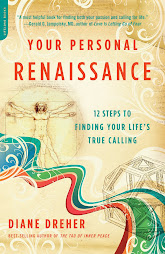
This blog offers insights from my books, including my new book, Your Personal Renaissance. .

I'll add posts on how to persevere in the light of personal, political, and planetary challenges--and I welcome your questions and comments.

Friday, August 12, 2011

Where do creative ideas come from?


I began asking this question in college while reading the English poets. Traherne, Blake, and Wordsworth found their inspiration looking back on childhood. Donne was inspired by love, Milton by a passionate commitment to his ideals. Shakespeare’s characters danced out of his imagination to grace the London stage.

But where did their creative ideas come from? As Shakespeare wrote in A Midsummer Night’s Dream:

The poet’s eye, in a fine frenzy rolling,
Doth glance from heaven to earth, from earth to heaven,
And as imagination bodies forth
The forms of things unknown, the poet’s pen
Turns them to shapes, and gives to airy nothing
A local habitation and a name.
(V.i. 12-17)
Over the years, from my own experience and that of others, I’ve found that creativity requires a clear channel, a sense of openness, and faith in the larger process.

Creativity can be blocked by ego. Whether we become too full of ourselves or surrender to incessant worry, inferiority and self-doubt, either way we focus solely on ourselves, leaving no room for creative insight.

Creativity can also be thwarted by distractions. As Coleridge was writing “Kubla Khan,” he was interrupted by a knock on the door from a person from Porlock. When he returned to his desk, his inspiration had fled. The poem remains unfinished, leaving only mysterious glimmers of “caverns measureless to man.”

Creativity can be cultivated by meditating, by reflecting on the patterns of nature, by taking time to embrace whatever brings you joy.

Creativity brings vision and the courage to pursue new possibilities. I grew up hearing John and Robert Kennedy say, “Most people look at things the way they are and ask ‘Why?’ I dream of things that never were and say, ‘Why not?’”

Now, more than ever, our world needs creativity—yours and mine. To transcend today’s monumental challenges, we must each cultivate our creativity to offer new visions of possibility to this beautiful, troubled planet we call home.

What is one thing you can do to cultivate your creativity today?

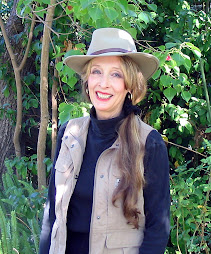
Diane

This entry was posted in Writing. Bookmark the permalink.

Monday, August 1, 2011

Trust the Process

A few years ago, I wrote a book, Inner Gardening: A Seasonal Path to Inner Peace.

Gardening has long been associated with spiritual practice. Medieval monasteries had their cloister gardens, green chapels of contemplation and renewal. Right now, I’m looking out my study window at my own garden, grateful for the sunlight-shadow patterns through the wisteria vines, the lemon and laurel trees, for what the poet Andrew Marvell called “a green thought in a green shade.”

Gardening teaches vital lessons: to be patient, to have faith in the eternal creative process. Years ago, my friend Pat, a gifted fiction writer, had a thriving garden on the balcony of her West Hollywood apartment–pots of herbs, lettuce, tomatoes, bell peppers, and onions. But when she planted an avocado seed in a pot, she grew impatient.

Weeks went by. Nothing. One day in frustration she dug up the seed to see what was happening. Then she found that beneath the surface the seed had germinated; a young seedling was ready to emerge. An important lesson–she told me her impatience had killed the plant.

In writing, as in gardening, a lot goes on beneath the surface. Creativity takes time. We cannot rush the process. A few weeks ago, I planted Kentucky wonder beans and set up teepees of six-foot wooden poles. For days, nothing. Then one morning a few seedlings broke ground, raising their tiny heads, reaching for the sky. This week their delicate vines have begun climbing up the poles. Finding their way by their own intelligence, they grow higher each day, spiraling around and around, ever upward. In time they will flower and bear fruit, all part of the creative process that includes you and me, our writing and our lives.

A key to creativity is faith in the larger process. What seeds are you planting now? What dreams are you cultivating in this season of your life?


Monday, July 4, 2011

Declare Your Independence

Picnics, fireworks, barbecues—most people celebrate the 4th of July this way. But it’s an invitation to much more: the liberation of the human spirit.

I have a copy of the Declaration of Independence on the wall beside my desk. On July 4, 1776 something almost unbelievable happened. By signing this document, 56 courageous individuals pledged their "lives, [their] fortunes, and [their] sacred honour" to an ideal, a new vision of government, to something that had never been done before. Yet they were willing to hazard all they had to reach for this invisible ideal and make it a reality.

Freedom requires the vision and moral courage to follow our dreams. Today what would you like to declare your independence from? It can be personal or political--an unproductive habit, a limiting belief, incessant self-criticism, violence, injustice, or fear that is holding you back from your dreams.

Today, I invite you to embrace the invitation to declare your independence, to summon the courage to follow your dreams. For as we do so, we can bring new hope and light to the world.

Wednesday, June 15, 2011

Seeds of life

This morning, tiny carrot and lettuce seedlings emerged in my garden. I'm always amazed when seeds suddenly spring to life--small miracles, affirmations of new life and new possibilities. What seeds are you planting in your life's garden this summer?

Friday, April 1, 2011

Yin and Yang

I’ve been interested in Eastern philosophy for a long time—because the Western World too often traps us in the logical fallacy of the false dilemma, reducing the whole world of our experience into only two choices: either/or, right or wrong, all or nothing, us or them.

Such thinking violates us at a deep level, turning conflict into combat, leading us into war.

Taoism originated 26 centuries ago during the warring states period in ancient China, inspiring two philosophers with very different visions of order.
Confucius developed an elaborate series of li, rules, social etiquette, reverence for ancestors & tradition.
Lao Tzu, the Henry David Thoreau of ancient China, found a dynamic order in the cycles of nature, sunlight and shadow, mountain and valley, action and repose--yin and yang.

Yang is the active element, yin the contemplative. Both are essential--yin and yang: valley and mountain, night and day, listening and speaking, self and other.
To be healthy, we each need both in dynamic balance--and we all need such a balance now more than ever to move from our conflict-ridden, chaotic world into new patterns of peace.

Friday, February 11, 2011

Finding Open Spaces in Your Life

Pushed and pulled by competing demands, rushing to catch up, juggling family needs and work expectations assaults us with chronic stress. Toxic to our systems, it literally making us sick. Research has linked toxic stress to increased risk for anxiety, high blood pressure, type 2 diabetes, heart attack, atherosclerosis, stroke, early dementia, and clinical depression. As Stanford University neurologist Robert Sapolsky realized researching baboons in Kenya and London scientist Michael Marmot learned studying British civil servants, it’s not so much the demands themselves, but the lack of personal control that breaks our systems down.

Buddhist teacher, musician, and high-tech entrepreneur Lewis Richmond offers a simple, subversive way to break through toxic stress.

In his book Work as a Spiritual Practice, Richmond tells of Christine, a nurse in a large urban hospital. Downsizing had increased her work load. She was always rushing down the halls from one patient’s room to the next. Richmond asked her to try a Buddhist practice, saying a mantram (or mantra), a short affirmation or spiritual phrase, while walking down the halls. By reclaiming that in-between time, Christine became less stressed, more caring with her patients, more at peace in her life.

This simple act of reclaiming the open spaces—finding margins in your days—can help you break the stress response as well.

Try this subversive practice. Instead of filling your mind with what you have to do, should have done, shouldn’t have done, find the open spaces in your days:
• When walking into work, to lunch, to a meeting—claim this time as your own.
• Take a deep breath and release it.
• Feel your body relax.
• Say a mantram or just look at something beautiful.
• Take another deep breath, release it, and feel new freedom in your life.

Monday, January 17, 2011

January 17, 2011

January 17, 2011--a new year of challenge and change and, on Martin Luther King Day, a call to live more creatively. I just heard Dr. King's eloquent words on the radio, a reminder to live by our deepest values, to never stop living the dream.

The political climate in this country is polarized, dismissive of differences, riddled with fear and defensiveness. What we need now is the courage to listen with compassion to ourselves and one another. To create new patterns of peace, we must continue to dream, to reach out in hope, to open our hearts to a better tomorrow.