Welcome to my Blog

Are you filled with more questions than answers? frustrated with what's happening in the world?
Then you're ready for your own personal Renaissance.

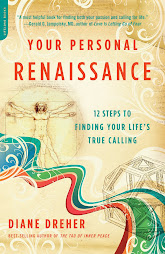
This blog offers insights from my books, including my new book, Your Personal Renaissance. .

I'll add posts on how to persevere in the light of personal, political, and planetary challenges--and I welcome your questions and comments.

Monday, January 9, 2012

Follow Your Dream in 2012

Despite our many challenges, the new year always brings a ray of light, a promise of new possibilities. This time last year, Alicia Forbrich left her secure job to follow her dream. In January, 2011, she opened opened the San Jose Learning Center in California's Silicon Valley, offering


Alicia Forbrich

continuing education to working adults--helping them learn new skills, develop their creativity, and lead more balanced lives.

The child of a German father and Japanese mother, Alicia has always been fascinated by other cultures. After getting a degree in International Business from the University of San Francisco and an M.B.A. from San Jose State, she had a successful career with a company building international shipping containers. But she dreamed of starting a school.

Today, she says “I’m fortunate to be able to go for my dream." The San Jose Learning Center reflects her vision of a successful, creative life in the 21st century, offering courses in 15 languages including Mandarin, Cantonese, Persian, Korean, Tagalog, Russian, Vietnamese, Arabic, ESL, and American Sign Language as well as Spanish, German, Italian, Portuguese, and French.

The curriculum helps promote a balanced life: languages to expand students’ international understanding, practical classes in business and computer skills, classes in the arts—writing, drawing, calligraphy—to promote creativity, and health and fitness classes—yoga, body toning, martial arts, and nutrition—to help students lead more balanced lives. “Most busy people don’t take the time to study what they need for their own health,” says Alicia. At Silicon Valley companies people spend all day sitting at their desks, sit in their cars to commute, never giving their bodies the exercise they need. Most students come to the Learning Center to learn a language for their work, with their tuition often paid by their companies. Health and fitness classes are scheduled before and after the language classes, so people can conveniently add them to their schedules. Since“a company can only be as strong as its owner,” Alicia works out every day. Running is her passion—“the only time I get pure silence,” time to organize her thoughts, answer her own questions, and get inspiration for the next step in her journey.

The Center’s classes are reasonably priced, seven weeks long, and small, giving personal attention to students. Classes are offered on weekday evenings and Saturdays, to accommodate schedules of working adults. The Center has ample parking and a break room with healthy snacks and wi-fi where people study and meet friends between classes, building community--another part of a balanced life. The Center also offers some free classes, such as Small Business 101, to help people start up their own small businesses, and Money Management, to help with personal finances.

“I’ve never worked so hard in my life,” says Alicia, “and I’ve never been happier.” While old job brought her money, security, and benefits, following her dream gives her a deep sense of purpose. She sees her school “making a difference every day,” she says, as students gain new knowledge, become more fit and confident, building the skills and courage they need to make a positive difference in the world. That’s Alicia’s dream.

Now it’s your turn. The year is new. What dream has been calling out to you? Take a deep breath and see yourself living your dream.

Now ask yourself, “What is one small step I can take to get started?” Take that step to make 2012 a bright new beginning-- right here and right now

For more information about the San Jose Learning Center, visit www.sanjoselearningcenter.com

490 West San Carlos St.
San Jose, CA 95110
(408) 722-1785

Monday, December 12, 2011

What CAN You Do?

The problems that fill the news these days seem so vast, so overwhelming that they can make us feel powerless. We can spiral into endless rounds of rumination, so caught up in the problems that we cannot see our way to any solutions, an attitude that psychologist Martin Seligman has called “learned helplessness” (1991). Yet in order to move forward in our lives, to stay sane in what often seems an insane world, we have to believe that we can make a difference.

Actually, we are always making a difference. Our actions either reinforce or redefine the status quo. As Frances Moore Lappé has said, “the choice we have is not whether, but only how, we change the world.” She encourages us to find “entry points,” small openings where we can begin making a difference (2010, pp. 118, 184).

We can begin looking for entry points by asking “What CAN I do?” With all the news of the big banks refusing to make loans and refinance mortgages, this month I transferred my savings from a big bank to a community credit union because it lends to small businesses and gives mortgages to low-income citizens, reaching out to rebuild our economy.

Over Thanksgiving, I heard about the “knit-in for the sit-in,” a creative idea from Maxina Ventura of Occupy Berkeley, who invites knitters to affirm solidarity with the Occupy movement by making hats, gloves, mittens, and scarves to send to people camped out this winter. This week I knitted my first stocking cap for a brother or sister in the movement.

When we reach out in hope, we are never alone. On the wall of my study is a quote from Margaret Mead: “Never doubt that a small group of thoughtful committed citizens can change the world. Indeed, it’s the only thing that ever has.”

In her new book, Ecomind, Lappé tells of a small group of citizens in Chattanooga, Tennessee, where the air quality was so bad in the 1960s it made national headlines. In the 1980s, 50 citizens came together to search for solutions. By the 1990s, the smog was gone with greenhouse gases reduced by 29% by free electric buses, a new riverside walk had transformed the city, crime was down, and tourists were coming to see the new aquarium. Affirming creativity over the status quo, the citizens are now planning a zero-emissions industrial park and a green convention center (2011, p. 185; 2010, p. 123-24)

The next time you feel overwhelmed by national and global problems,
ask yourself, “What CAN I do?”
and begin to make a difference,
right here, right now.

References

Lappé, F. M. (2010). Getting a Grip2. Cambridge, MA: Small Planet Media.

Lappé, F. M. (2011). Ecomind: Changing the Way We Think to Create the World We Want. New York: Nation Books.

Seligman, M. E. P. (1991) Learned optimism. New York: Knopf.

For information about the “knit-in,” see http://sanfrancisco.cbslocal.com/2011/11/26/crafters-organize-knit-in-in-solidarity-with-occupy-berkeley/. Knitted and crocheted items may also be sent to Occupy Berkeley, c/o Maxina Ventura, 2399 E. 14th St. No 24, San Leandro, CA 94577.

Monday, November 21, 2011

The Power of Water


"Nothing on earth
Is more gentle and yielding than water
Yet nothing is stronger."

(Tao Te Ching 78 )

Water nurtures all life on earth. Falling from the sky to the ground as precipitation—rain or snow—it flows as surface water through rivers into lakes and oceans, or percolates deep into the earth through layers of sediment, becoming aquifers, vast underground lakes. With the sun’s heat, surface water evaporates, rising as vapor to form clouds, and the cycle begins again. There is always the same amount of water on earth. We drink the same water that the dinosaurs drank. The golden wheat fields of the American Midwest are irrigated by water from the Ogallala Aquifer, a massive underground lake that dates back to the Pleistocene era

Throughout its cycle, water takes many forms--from snowflakes, tiny lace mandallas from the sky, to shimmering icicles, to a summer’s day heavy with humidity, to the rapids of a roaring river.

Water can be beautiful or destructive. A few weeks ago, violent rain storms flooded El Salvador, washing out roads, trapping a group of students on a mountain top, destroying crops, leaving many people homeless and hungry. As the water cycle connects us all, so in the cycle of life, we are all connected. Many of us are reaching out to help, sending our thoughts and prayers and contributing what we can to Programa Velasco to help the disaster victims at http://programavelasco.org/diaster-relief-?lang=en

All contributions, large and small, are welcome.

The water cycle includes us all, and there’s a powerful parallel between water and the energies of our lives. Some energies are creative, life-sustaining; others, destructive streams of fear or greed. Each day, we contribute to the collective energy of the planet, the cycle of life within and around us.

Living creatively means becoming more mindful of our energies. Take a moment to ask yourself:
--Am I adding to the currents of fear flooding our planet?
--Or does my heart open in currents of compassion, loving kindness, to nurture and create?

Whatever challenges you are facing in your life,

Take a deep breath.
Breathe out fear.
Breathe in love.
Connect with the eternal cycle of life

Right here, right now.

References:
For the Tao quote, Dreher, D. (2000). The Tao of Inner Peace. New York: Penguin Putnam.

To contribute to disaster relief, http://programavelasco.org/diaster-relief-?lang=en


Friday, November 4, 2011


Do you have a nagging inner voice that says you’re “not good enough,” lashing out critically whenever you make a mistake? If so, you’re not alone. When we fall short of our goals, we often sabotage ourselves with harsh self-criticism.

Most of us are kinder to the people around us than we are to ourselves. We give our friends kindness and support when they make a mistake but often blame ourselves when we’re in the same situation.

We treat ourselves this way because we’ve been sabotaged by competitive consumer values, internalized the critical voices of our parents, or grown up blaming ourselves for family patterns of alcoholism, neglect, or abuse. Haunted by a deep sense of unworthiness, we develop a pattern of harsh self-criticism that assaults us when we’re down, increasing our suffering and blocking our path to higher creativity.

University of Texas psychologist Kristin Neff, Ph.D., has found that we can stop this painful pattern with the power of self-compassion, a lesson drawn from thousands of years of Buddhist practice. As she explains in her new book, Self-Compassion: Stop Beating Yourself Up and Leave Insecurity Behind, this means to “accept ourselves with an open heart, to treat ourselves with the same kindness, caring, and compassion we would show to a good friend.” Neff, the leading researcher in the field, has inspired over a thousand scientific studies that show how self-compassion helps overcome anxiety and depression and leads to better psychological and physical health, including emotional intelligence, happiness, wisdom, curiosity, optimism, autonomy, competence, social connections, life satisfaction, resilience, initiative, and the ability to learn, grow, and overcome challenges—qualities that nurture our creativity.

Self-compassion involves three steps.

  1. Mindfulness. The next time you’re feeling down, instead of blowing things out of proportion, ask yourself, “What is this?” “What am I feeling?” Name your feelings to yourself—“I feel sad, scared, hurt, angry, confused.”
  2. Common humanity. As the Buddha taught, suffering is common to all humanity. Tell yourself, “It’s OK. No one’s perfect. Everyone makes mistakes.”
  3. Kindness to yourself. Then actively soothe yourself with kind words, even giving yourself a hug, as Neff suggests in her book, by crossing your arms over your chest and squeezing your upper arms, saying, “Poor dear, you’re really hurting right now.”

You can build self-compassion with this loving-kindness meditation.

  • Take a deep breath, close your eyes and visualize someone for whom you feel unconditional love—a loved one, a dear friend, even a beloved pet.
  • Say, “May you be filled with loving kindness. May you be well. May you be peaceful and at ease. May you be happy.”
  • Cross your arms over your chest and breathe deeply into your heart, saying for yourself: “May I be filled with loving kindness. May I be well. May I be peaceful and at ease. May I be happy.”
  • Then send loving kindness to other people you know, ending with a blessing for all beings: “May all beings be filled with loving kindness. May all be well. May all be peaceful and at ease. May all be happy.”

You can find out more about self-compassion, including more self-compassion exercises in Kristin Neff’s book and on her web site, http://www.self-compassion.org.


Sunday, October 16, 2011

Seeds of possibilities

The daily news mesmerizes us with messages of lack. There’s not enough—not enough energy reserves to meet our future needs, not enough food to feed the hungry, not enough jobs in the US economy or enough money in the federal budget for education, health care, environmental protection, Social Security, and Medicare, not to mention the arts. As concerned citizens, we may wonder what difference we can make when the problems are so vast. As creative artists we may think that there are not enough opportunities for us, or feel at a loss for ideas, wondering what to do next.


But these conclusions are based on the status quo, on what we know now, not what may be. My garden reminds me that we live in a world of dynamic growth, a world of possibilities. The bright red clusters of tomatoes in my garden, “Sweet 100’s,” offer silent testimony to the seeds of possibilities within and around us. During a single growing season, each Sweet 100 plant can bear over one hundred tomatoes. That’s a sign of abundance right there. But depending on the variety, a single tomato can contain from 16 to over 300 seeds, each of which could become a tomato plant. At this point we’re in the realm of higher mathematics. How many potential tomatoes exist within one tomato plant?

How many creative ideas exist within one human soul?

Never believe that there is not enough. As long as the vibrant forces of nature embrace this planet, as long as men and women can breathe and create, there will be new possibilities we haven’t even dreamed of.

Two keys to creativity are vision and faith. As thousands of potential tomatoes exist in one small seed, so the fruition of our creative work exists in the first flash of inspiration. As we open our hearts in faith, we can follow that inspiration to creative fulfillment.

Over 25 centuries ago, Lao Tzu wrote in the Tao Te Ching:

A tree that reaches past your embrace
Grows from one small seed.
A structure over nine stories high
Begins with a handful of earth.
A journey of a thousand miles
Starts with a single step.

(Tao Te Ching 64 from The Tao of Inner Peace)

Take that step. Embrace your creativity, and open your heart to new possibilities right here, right now.

Diane

Wednesday, September 28, 2011

Our attitudes affect our creativity, health, and well-being. When researchers Erika Rosenberg and Paul Ekman studied the connection between angry facial expressions and myocardial ischemia, an abnormal cardiac response in heart disease patients, they found, as expected, that hostile “Type A” behavior is toxic to our hearts. But they also found something else--an equally strong connection between unhealthy cardiac reactions and phony smiles.

We pay a price for being too nice. A phony smile may fool others, but cannot fool our bodies. Rosenberg’s and Ekman’s research shows that pretense—repressing our frustrations beneath an acquiescent smile--puts us under excessive stress.

Real positive emotions, on the other hand, help us become healthier, happier, and more creative. As psychologist Barbara Fredrickson explains in her book, Positivity, love, joy, elevation, and gratitude strengthen our immune systems, making us physically healthier, while broadening our vision and building our resources. Positive emotions expand our perspective, helping us see more clearly, discover new possibilities, build connections with other people, who share ideas and insights, supporting us in our creative work. In order to truly flourish, Fredrickson says, we need at least a 3-to-1 ratio--three positive emotional experiences to one negative one each day. As she explains in Positivity, once we reach this point, we will experience greater energy, inspiration, and insight, opening us up to greater creative accomplishment and joy in life. To find out more about Dr. Fredrickson’s research check out her video http://www.youtube.com/watch?v=Ds_9Df6dK7c

You can track your own positivity ratio on her web site, https://www.positivityratio.com/

You can begin building greater positivity by:

  • Practicing mindfulness.
  • Meditating
  • Doing what you love
  • Pausing to give thanks
  • Playing
  • Reading inspiring books.
  • Laughing
  • Exercising
  • Being with people you love
  • Doing your creative work

Our greatest natural resources are our hearts and minds. You can begin making a positive difference in the world by strengthening your creativity, building your personal resources by embracing greater joy--right here, right now.


Tuesday, September 6, 2011

Staying Creative in Challenging Times: An Interview with Michelle Chappel


All the news on the media these days seems to be bad news. Negativity clouds our creativity. To keep moving forward as creative artists, we have to keep our spirits up.

Michelle Chappel is a Billboard-winning singer-songwriter with a Princeton Ph.D. in psychology. She’s also a creativity consultant who teaches personal growth classes and conducts innovation workshops for Silicon Valley companies.

Drawing upon her psychology background, she offers songs of hope on her new CD, “Shake It Up,” available on her web site, http://www.michellechappel.com/. In a recent interview she shared a powerful key to maintaining our creative momentum.

The key is controlling attention.
When #@$% happens, or we’re surrounded by bad news, we can easily get stuck in the negative. We ruminate, going around and around in a downward spiral that drains our energy. But there is a way out. “Try to see the bigger picture of what’s going on,” says Michelle. Referring to classic research in cognitive psychology on the figure-ground effect, she calls this process “figure/grounding” it. As the classic illustration shows, we can see either the central vase or the two profiles as the figure. We have a choice.

“We always have a choice,” says Michelle, “no matter what is going on. There’s always a background. When I’m stuck in a negative thought, I figure/ground it–and something else comes into the foreground.” Shifting our attention gets us unstuck. We can revive our spirits and become re-energized by focusing on what is going well in our lives.

Try this for yourself the next time you’re feeling overwhelmed by bad news. Remember: you always have a choice. And as creative artists, it is our duty and destiny to keep our spirits up so we can participate in the ongoing creation of a new reality for ourselves and our world.