Welcome to my Blog

Are you filled with more questions than answers? frustrated with what's happening in the world?
Then you're ready for your own personal Renaissance.

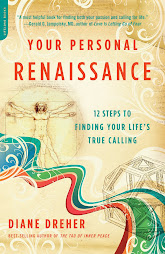
This blog offers insights from my books, including my new book, Your Personal Renaissance. .

I'll add posts on how to persevere in the light of personal, political, and planetary challenges--and I welcome your questions and comments.

Tuesday, April 10, 2012

All The World's a Stage

Shakespeare wrote that “all the world’s a stage and all the men and women merely players” (Greenblatt, 1997). How we relate to the world around us shapes the daily drama of our lives. Are we mere puppets, dancing to someone else’s tune, second rate actors mouthing our lines—or jazz musicians, improvisational artists, actors who make the parts our own, creating a new reality in response to the world around us? Is our vision of reality static or dynamic?

Stanford psychologist Carol Dweck has made a powerful discovery, recognizing the degree to which our sense of self, our abilities, our success in life depend upon our “mindset.” People with what she calls a “set mindset” are stuck in the status quo, believing that their intelligence cannot be changed, while those with a “growth mindset” believe that their intelligence increases as they embrace new challenges in their lives.

Neuroscience research has shown that our brains develop throughout our lives, growing new neural connections in response to stimulation. So if you cannot ride a bicycle, use a new computer program, play a musical instrument, or do any other new task, regular practice will stimulate your brain to develop new connections. After days, perhaps weeks of clumsy attempts and awkward efforts, suddenly one day it all comes together: suddenly you can do it. Stimulated by all that effort, new brain connections have formed.

On a cultural level, the two mindsets of growth or status quo reach back to the earliest Renaissance concepts of vocation. Both Martin Luther and John Calvin believed that we were blessed with unique gifts and called to use them to serve God and our neighbors. But Luther saw the world as set, with the social order created by God—so that if your father was a butcher, a baker, or a glove maker, you were destined to follow his trade. But Calvin looked at the social injustice around him and concluded that God had nothing to do it: the social order was constructed by men. He believed we were called to discover our talents and use them to create new possibilities. With such a growth mindset, one glove maker’s son, William Shakespeare, found his calling on the London stage, writing plays that have inspired the world for centuries.

One view of life was dynamic, the other static; one led to conformity, the other to creativity and social change. These two social mindsets appear on many levels. The 18th century gave rise to two views of patriotism: 1) obedience to the status quo or 2) ideals that led to a new form of government, moving from monarchy to democracy, government of the people and the rule of law.


The world around us continually affirms a growth mindset. Look around you at the flowers of spring as they blossom and raise their heads to the sky. We can also find growth and set mindsets in our daily lives. Recently, when I questioned a longstanding policy at work, some people said “but we’ve always done it that way.” Yet just because we’ve done something for years doesn’t make it right or rule out better alternatives. If our country had followed a set mindset, there would be no progress, no airplanes, electricity, phones, or computers; women couldn’t vote and there would still be slaves. Progress—in science, art, politics, and life—flows from a growth mindset.

Now it’s your turn:

  • Do you believe your intelligence and abilities are static or dynamic?
  • Do you have a set or a growth mindset?

Whatever you have believed about yourself in the past, you really can change your intelligence and ability with practice--brain research has shown this is true. And by embracing a growth mindset, you can create greater possibilities within and around you.

Take a moment now to breathe in—realize that you are a living, growing unique individual, able to make a dynamic difference in your world, right here, right now.

References

Dweck, Carol. S. (2006). Mindset. New York, NY: Ballentine Books. Watch a video of Professor Dweck explaining her mindset research at http://www.youtube.com/watch?v=XHW9l_sCEyU

Shakespeare, William. (1997) As You Like It. II. 7. ll. 138-139 in Stephen Greenblatt (Ed.). The Norton Shakespeare. New York, NY: W. W. Norton. Date of composition c. 1599; originally published 1623

Wednesday, February 29, 2012

Creation or Stagnation?

Does your environment foster creation or stagnation? A recent study in Psychological Science has shown that while administrators and corporate CEOs talk a lot about creative innovation, they routinely block it. Threatened by the uncertainty of the creative process, they stifle the creative ideas of their people to maintain a predictable status quo: an absolute formula for stagnation (Mueller, Melwani, & Goncalo, 2012). And when they do promote change, these administrators over control. Instead of listening and learning from the people around them, they impose a new policy top-down, rewarding complicity, not creativity.

What our world needs now is not complicity but deep creativity, the courage to reach beyond the status quo for new solutions, new possibilities. This vision of creative leadership is affirmed in the ancient Chinese classic, the Tao Te Ching, which has inspired artists and innovative leaders for over twenty-five centuries. The Tao reminds us to look beyond divisive policies and limited definitions to learn from the wisdom of nature, the patterns within and around us:

The earth and sky cooperate
And the soft rain falls
Not by man’s laws
But by natural harmony.

When civilizations developed,
Definitions arose.
We know the part and not the whole.
Wisdom is seeing the patterns.
. . .
The powerful currents of Tao
Are like a river
Flowing homeward
To the sea.
(Tao Te Ching, chapter 32, from Dreher, 2000, pp. 242, 6, 198)

Change, in the Tao, is part of the natural cycle, and uncertainty the path to higher wisdom:

The way to greater light leads through the darkness.
Going ahead feels like falling back.
The even path seems rugged and hilly,
The highest power, a yielding valley.

The greatest virtue seems unreal,
And strength of character appears like folly.
Great space has no boundaries.
The greatest skill is developed gradually,
The greatest music rarely heard.

The great Tao is without form,
Elusive, undefinable,
Yet the source of all life.”
(Tao Te Ching, chapter 41, from Dreher, 2000, p. 213 and Dreher, 1996, p. 9)

As you face the challenges in your life, you can draw upon the wisdom of Tao. By pausing to recognize the larger patterns within and around you, you can transcend the status quo, experiencing the power and joy of new possibilities.

Take a moment now to breathe deeply. Know that you are part of the larger process. Embrace the infinite source of your creative power, right here, right now.

References
Dreher, D. (1996). The Tao of Personal Leadership. New York,NY: HarperCollins.

Dreher, D. (2000). The Tao of Inner Peace. New York,NY: Penguin Putnam.

Mueller, J. S., Melwani, S., & Goncalo, J. A. (2012). The bias against creativity: Why people desire but reject creative ideas. Psychological Science, 23, 13-17.

See Lao Tzu, Tao Te Ching. (2011). Gia-Fu Feng, Jane English, Toinette Lippe. (Trans.). New York, NY: Random House/Vintage for a beautiful translation of the Tao Te Ching with original Chinese calligraphy and evocative nature photography.

Wednesday, January 25, 2012

You CAN Make a Difference


As we create with words, images, and ideas, we participate in a powerful pattern of transformation. When we release our creations to the world, we never know how far they will travel, how many souls they will reach.

In 1848, a young man spent a night in jail for refusing to pay a poll tax, protesting against slavery and the Mexican-American War. The next morning, a friend paid his tax and he was released. A small action, unremarkable, perhaps. Yet this action inspired Henry David Thoreau to write Civil Disobedience, which later inspired Mahatma Gandhi’s campaign of nonviolence, liberating India from colonial rule; Martin Luther King’s campaign of nonviolence that began liberating African Americans from oppression and segregation; and countless other acts of nonviolence, large and small, that continue to liberate the human spirit.

We are all connected in the intricate pattern of life. Never doubt that your call to create is part of a process of transformation in which our individual actions ripple out to change the world.

Lately, I’ve been inspired by people in the Occupy Movement, raising their voices against corporate greed, injustice, and economic inequality. Now Maxina Ventura of Occupy Berkeley, has found a creative way many of us can connect in support and solidarity. She founded the “knit-in for the sit-in,” inviting people to knit at the Berkeley farmers’ market and send hand-knit hats, mittens, and scarves to help Occupy members keep warm this winter. So far, I’ve knitted four hats which have been sent to Occupy Wall Street, Tahrir Square, and Fukushima, Japan. Knitting these hats has become a kind of spiritual exercise, affirming my personal connection with this courageous campaign for change.

Because we are all connected, everything we do makes a difference, continuously creating the world we know. How can you make a difference in your own creative life? Following your heart will show you how. Together, we can create new possibilities for our world—right here and right now.

For More Information about the “knit-in,” see http://sanfrancisco.cbslocal.com/2011/11/26/crafters-organize-knit-in-in-solidarity-with-occupy-berkeley/. If you’d like to knit warm items for the Occupy Movement, you may send them to Occupy Berkeley, c/o Maxina Ventura, 2399 E. 14th St. No 24, San Leandro, CA 94577.

Monday, January 9, 2012

Follow Your Dream in 2012

Despite our many challenges, the new year always brings a ray of light, a promise of new possibilities. This time last year, Alicia Forbrich left her secure job to follow her dream. In January, 2011, she opened opened the San Jose Learning Center in California's Silicon Valley, offering


Alicia Forbrich

continuing education to working adults--helping them learn new skills, develop their creativity, and lead more balanced lives.

The child of a German father and Japanese mother, Alicia has always been fascinated by other cultures. After getting a degree in International Business from the University of San Francisco and an M.B.A. from San Jose State, she had a successful career with a company building international shipping containers. But she dreamed of starting a school.

Today, she says “I’m fortunate to be able to go for my dream." The San Jose Learning Center reflects her vision of a successful, creative life in the 21st century, offering courses in 15 languages including Mandarin, Cantonese, Persian, Korean, Tagalog, Russian, Vietnamese, Arabic, ESL, and American Sign Language as well as Spanish, German, Italian, Portuguese, and French.

The curriculum helps promote a balanced life: languages to expand students’ international understanding, practical classes in business and computer skills, classes in the arts—writing, drawing, calligraphy—to promote creativity, and health and fitness classes—yoga, body toning, martial arts, and nutrition—to help students lead more balanced lives. “Most busy people don’t take the time to study what they need for their own health,” says Alicia. At Silicon Valley companies people spend all day sitting at their desks, sit in their cars to commute, never giving their bodies the exercise they need. Most students come to the Learning Center to learn a language for their work, with their tuition often paid by their companies. Health and fitness classes are scheduled before and after the language classes, so people can conveniently add them to their schedules. Since“a company can only be as strong as its owner,” Alicia works out every day. Running is her passion—“the only time I get pure silence,” time to organize her thoughts, answer her own questions, and get inspiration for the next step in her journey.

The Center’s classes are reasonably priced, seven weeks long, and small, giving personal attention to students. Classes are offered on weekday evenings and Saturdays, to accommodate schedules of working adults. The Center has ample parking and a break room with healthy snacks and wi-fi where people study and meet friends between classes, building community--another part of a balanced life. The Center also offers some free classes, such as Small Business 101, to help people start up their own small businesses, and Money Management, to help with personal finances.

“I’ve never worked so hard in my life,” says Alicia, “and I’ve never been happier.” While old job brought her money, security, and benefits, following her dream gives her a deep sense of purpose. She sees her school “making a difference every day,” she says, as students gain new knowledge, become more fit and confident, building the skills and courage they need to make a positive difference in the world. That’s Alicia’s dream.

Now it’s your turn. The year is new. What dream has been calling out to you? Take a deep breath and see yourself living your dream.

Now ask yourself, “What is one small step I can take to get started?” Take that step to make 2012 a bright new beginning-- right here and right now

For more information about the San Jose Learning Center, visit www.sanjoselearningcenter.com

490 West San Carlos St.
San Jose, CA 95110
(408) 722-1785

Monday, December 12, 2011

What CAN You Do?

The problems that fill the news these days seem so vast, so overwhelming that they can make us feel powerless. We can spiral into endless rounds of rumination, so caught up in the problems that we cannot see our way to any solutions, an attitude that psychologist Martin Seligman has called “learned helplessness” (1991). Yet in order to move forward in our lives, to stay sane in what often seems an insane world, we have to believe that we can make a difference.

Actually, we are always making a difference. Our actions either reinforce or redefine the status quo. As Frances Moore Lappé has said, “the choice we have is not whether, but only how, we change the world.” She encourages us to find “entry points,” small openings where we can begin making a difference (2010, pp. 118, 184).

We can begin looking for entry points by asking “What CAN I do?” With all the news of the big banks refusing to make loans and refinance mortgages, this month I transferred my savings from a big bank to a community credit union because it lends to small businesses and gives mortgages to low-income citizens, reaching out to rebuild our economy.

Over Thanksgiving, I heard about the “knit-in for the sit-in,” a creative idea from Maxina Ventura of Occupy Berkeley, who invites knitters to affirm solidarity with the Occupy movement by making hats, gloves, mittens, and scarves to send to people camped out this winter. This week I knitted my first stocking cap for a brother or sister in the movement.

When we reach out in hope, we are never alone. On the wall of my study is a quote from Margaret Mead: “Never doubt that a small group of thoughtful committed citizens can change the world. Indeed, it’s the only thing that ever has.”

In her new book, Ecomind, Lappé tells of a small group of citizens in Chattanooga, Tennessee, where the air quality was so bad in the 1960s it made national headlines. In the 1980s, 50 citizens came together to search for solutions. By the 1990s, the smog was gone with greenhouse gases reduced by 29% by free electric buses, a new riverside walk had transformed the city, crime was down, and tourists were coming to see the new aquarium. Affirming creativity over the status quo, the citizens are now planning a zero-emissions industrial park and a green convention center (2011, p. 185; 2010, p. 123-24)

The next time you feel overwhelmed by national and global problems,
ask yourself, “What CAN I do?”
and begin to make a difference,
right here, right now.

References

Lappé, F. M. (2010). Getting a Grip2. Cambridge, MA: Small Planet Media.

Lappé, F. M. (2011). Ecomind: Changing the Way We Think to Create the World We Want. New York: Nation Books.

Seligman, M. E. P. (1991) Learned optimism. New York: Knopf.

For information about the “knit-in,” see http://sanfrancisco.cbslocal.com/2011/11/26/crafters-organize-knit-in-in-solidarity-with-occupy-berkeley/. Knitted and crocheted items may also be sent to Occupy Berkeley, c/o Maxina Ventura, 2399 E. 14th St. No 24, San Leandro, CA 94577.

Monday, November 21, 2011

The Power of Water


"Nothing on earth
Is more gentle and yielding than water
Yet nothing is stronger."

(Tao Te Ching 78 )

Water nurtures all life on earth. Falling from the sky to the ground as precipitation—rain or snow—it flows as surface water through rivers into lakes and oceans, or percolates deep into the earth through layers of sediment, becoming aquifers, vast underground lakes. With the sun’s heat, surface water evaporates, rising as vapor to form clouds, and the cycle begins again. There is always the same amount of water on earth. We drink the same water that the dinosaurs drank. The golden wheat fields of the American Midwest are irrigated by water from the Ogallala Aquifer, a massive underground lake that dates back to the Pleistocene era

Throughout its cycle, water takes many forms--from snowflakes, tiny lace mandallas from the sky, to shimmering icicles, to a summer’s day heavy with humidity, to the rapids of a roaring river.

Water can be beautiful or destructive. A few weeks ago, violent rain storms flooded El Salvador, washing out roads, trapping a group of students on a mountain top, destroying crops, leaving many people homeless and hungry. As the water cycle connects us all, so in the cycle of life, we are all connected. Many of us are reaching out to help, sending our thoughts and prayers and contributing what we can to Programa Velasco to help the disaster victims at http://programavelasco.org/diaster-relief-?lang=en

All contributions, large and small, are welcome.

The water cycle includes us all, and there’s a powerful parallel between water and the energies of our lives. Some energies are creative, life-sustaining; others, destructive streams of fear or greed. Each day, we contribute to the collective energy of the planet, the cycle of life within and around us.

Living creatively means becoming more mindful of our energies. Take a moment to ask yourself:
--Am I adding to the currents of fear flooding our planet?
--Or does my heart open in currents of compassion, loving kindness, to nurture and create?

Whatever challenges you are facing in your life,

Take a deep breath.
Breathe out fear.
Breathe in love.
Connect with the eternal cycle of life

Right here, right now.

References:
For the Tao quote, Dreher, D. (2000). The Tao of Inner Peace. New York: Penguin Putnam.

To contribute to disaster relief, http://programavelasco.org/diaster-relief-?lang=en


Friday, November 4, 2011


Do you have a nagging inner voice that says you’re “not good enough,” lashing out critically whenever you make a mistake? If so, you’re not alone. When we fall short of our goals, we often sabotage ourselves with harsh self-criticism.

Most of us are kinder to the people around us than we are to ourselves. We give our friends kindness and support when they make a mistake but often blame ourselves when we’re in the same situation.

We treat ourselves this way because we’ve been sabotaged by competitive consumer values, internalized the critical voices of our parents, or grown up blaming ourselves for family patterns of alcoholism, neglect, or abuse. Haunted by a deep sense of unworthiness, we develop a pattern of harsh self-criticism that assaults us when we’re down, increasing our suffering and blocking our path to higher creativity.

University of Texas psychologist Kristin Neff, Ph.D., has found that we can stop this painful pattern with the power of self-compassion, a lesson drawn from thousands of years of Buddhist practice. As she explains in her new book, Self-Compassion: Stop Beating Yourself Up and Leave Insecurity Behind, this means to “accept ourselves with an open heart, to treat ourselves with the same kindness, caring, and compassion we would show to a good friend.” Neff, the leading researcher in the field, has inspired over a thousand scientific studies that show how self-compassion helps overcome anxiety and depression and leads to better psychological and physical health, including emotional intelligence, happiness, wisdom, curiosity, optimism, autonomy, competence, social connections, life satisfaction, resilience, initiative, and the ability to learn, grow, and overcome challenges—qualities that nurture our creativity.

Self-compassion involves three steps.

  1. Mindfulness. The next time you’re feeling down, instead of blowing things out of proportion, ask yourself, “What is this?” “What am I feeling?” Name your feelings to yourself—“I feel sad, scared, hurt, angry, confused.”
  2. Common humanity. As the Buddha taught, suffering is common to all humanity. Tell yourself, “It’s OK. No one’s perfect. Everyone makes mistakes.”
  3. Kindness to yourself. Then actively soothe yourself with kind words, even giving yourself a hug, as Neff suggests in her book, by crossing your arms over your chest and squeezing your upper arms, saying, “Poor dear, you’re really hurting right now.”

You can build self-compassion with this loving-kindness meditation.

  • Take a deep breath, close your eyes and visualize someone for whom you feel unconditional love—a loved one, a dear friend, even a beloved pet.
  • Say, “May you be filled with loving kindness. May you be well. May you be peaceful and at ease. May you be happy.”
  • Cross your arms over your chest and breathe deeply into your heart, saying for yourself: “May I be filled with loving kindness. May I be well. May I be peaceful and at ease. May I be happy.”
  • Then send loving kindness to other people you know, ending with a blessing for all beings: “May all beings be filled with loving kindness. May all be well. May all be peaceful and at ease. May all be happy.”

You can find out more about self-compassion, including more self-compassion exercises in Kristin Neff’s book and on her web site, http://www.self-compassion.org.